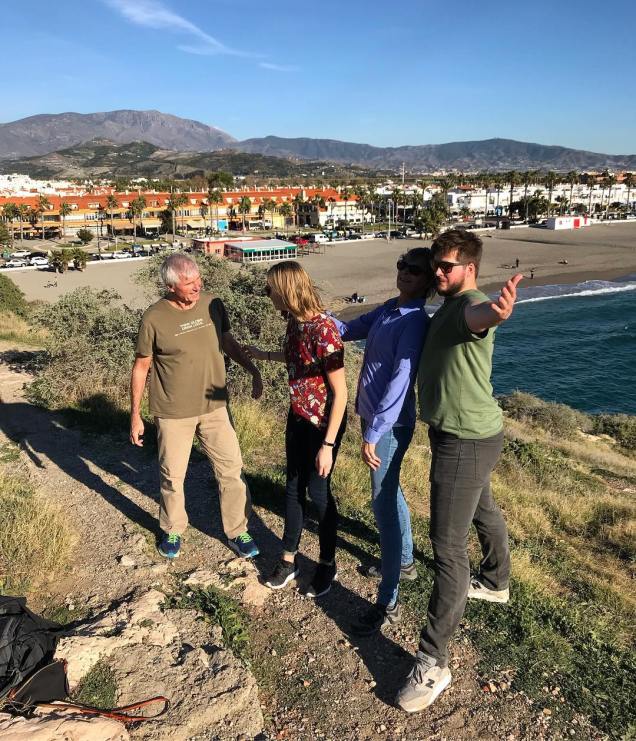
Granada, Spain- Christmas and New Year’s with the kids and friends. Alhambra, Flamenco and more. Dec. 17-Jan.14.

We had planned a month in Granada, Spain before we left in April.  We  found an AirBnB that could handle 6 people in a neighborhood that was walking distance to public transportation and nearby restaurants , bars and groceries.  The idea was to have a place where our kids and their friends could visit over Christmas and New Years.

https://en.wikipedia.org/wiki/Granada

Granada is in southern Spain and near the Sierra mountains. Granada  has been inhabited for thousands of years and has been influenced by Roman, Muslim and Catholic cultures.  The most famous site in the city is Alhambra, a fortress first built by the Romans and then converted to a palace/fortress in the 13th century by the Moors.  It is a fabulous, well maintained UNESCO site that can’t be missed.  You need to make reservations in advance to tour the palace and it is well worth the effort.


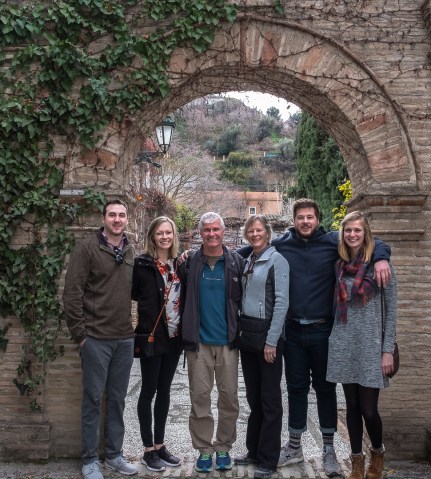
After 9 months of traveling through Europe it was great to have Christmas and New Years with Doug, Rachel, Charlie and Brita.  Besides Christmas, we spent New Years Eve together listening to a American Classic R&R   played by a Spanish rock group in a nearby square until 3 am. My ears are still ringing.

We went to a Flamenco show and traveled to Salobrena, Spain on the Mediterranean .  We also went on a tour of the Granada Bull Fighting Ring (fascinating).  There weren’t any bull fights when we were there but here is a link to a Granada Bull fight.
26685457_3474708987860_4865726284351615355_o
Solbrena Spain

Alhambra- More info at  https://en.wikipedia.org/wiki/Alhambra .


In 1492,  the Moors were defeated and Granada became a Catholic city.  There are  multiple cathedrals , churches and monasteries to visit, each with its own architectural influence.


Kaye and I took a short trip to Seville, Spain.  Another city with a Moorish background and also the alleged tomb of Christopher Columbus.


Other photos from Granada and Salobrena, Spain.


After Granada,  Kaye and I took the train to Cordoba for a week and then Madrid for a week.   Kaye’s sister, Janeil, and her daughter, Hannah, joined us for a few days at each city.

Lisbon, Portugal, part 2: Sintra, Lisbon Oceanarium, Fado and other adventures.

Some of the places we went and things we did in Lisbon.

Seems like we’ve gone to a few zoos on this trip so why leave Lisbon Zoo out.  Zoos can tell you a lot about city and Lisbon’s was no exception.  A fair amount of space for the animals and they looked healthy but not many visitors.  There is a new Oceanarium on the other side of town and that seems to be getting all the attention both financially as well in attendance.


One of the highlites was an overnight visit to Sintra.  A small town about a 40 minute train ride west of Lisbon.  It is a Unesco Heritage site because of it many Romantic monumental estates.  It is also known for it’s natural beauty of forests, hills and proximity to the Atlantic Ocean.  It’s a little bit like a fairy land that you’d encounter at Disneyland.  Also in Sintra is the remains of a castle built by the Moors in the 9th Century.


Spent an evening at an restaurant in Alfama that featured Fado music.  Fado is to Lisbon as Blues is to Chicago.  Down the street from where we stayed in Lisbon was the Fado Museum.  Most Portuguese we talked with weren’t big fans of Fado but you have to experience it if you’re in Portugal.  Here’s a sample of Amalia Rodrigues, a Portuguese icon of  Fado.


We fought off an attempted mugging of Kaye’s purse in the street.  The mugger came out with a ripped jacket and hopefully a few bruises.  We came out unscathed and intact.

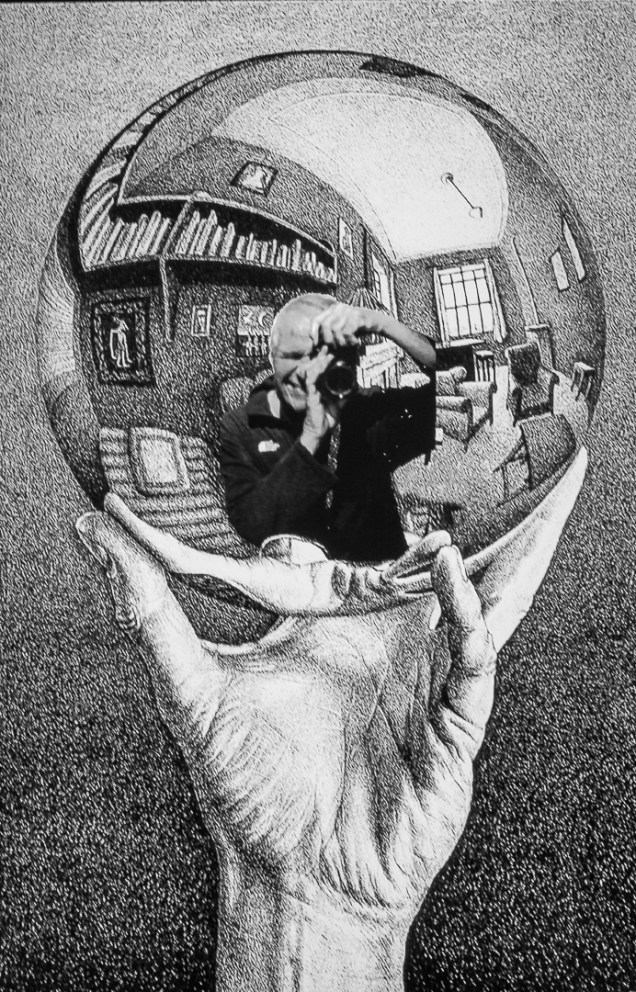
We went to a exhibition of M C Escher which was excellent.  It showed his progression of work and his inspirations.  Didn’t take many photos but check out the Official MC Escher web site to find out more.  http://www.mcescher.com


We did a day tour that took us over the Vasco de Gama Bridge to the villages and country side south of Lisbon that included a fishing village and a Cave (wine cellar).  We returned over the April 5th Bridge.  Had a great ‘catch of the day’ lunch.


The National Coach Museum of Portugal.  Some coaches were the totally over the top for the wealthy aristocrats of the 17th and 18th Century.  Excellent Museum.


More images from Lisbon.


After Lisbon we flew to Granada, Spain on Iberian Airlines where we spent a month.  Doug, Rachel, Charlie and Brita joined for Christmas and New Years.

Lisbon (Lisboa), Portugal, part 1: sights of the city. Nov. 28-Dec. 17, 2017.

We flew Ryan Airlines from Glasgow directly to Lisbon.  Our first time with Ryan and all went well.  You just have to make sure you know what you’re doing as they will ding you a lot for little things.

We stayed in the Alfama neighborhood of  Lisbon which is the oldest part of Lisbon.  It is a labyrinth of winding, narrow, hill side  streets with bars mixed in with apartments,  restaurants and shops.  A devastating earthquake in 1755 leveled most of Lisbon but spared Alfama giving it a unique charm.  ( More can be found about the neighborhood at https://en.wikipedia.org/wiki/Alfama .)

We tried to stay active during our 3 week stay.  We found a nice 50 meter pool but it took about an hour and a half to get there and the same coming back.  We managed 2 swims a week and would sometimes stop off to site-see on the way back from a  workout.
We also did  an authentic Portuguese cooking class.  We met with two other couples at a small apartment not too far from ours where an expert chef showed us how to make Portuguese steamed clams, stuffed squid, a garbanzo bean salad with chopped up tentacles.  It was a very nice evening with good company and good food.

The Portuguese Navy was established 700 years ago- that would be in 1317.  At one time it was the most powerful navy in the world and participated in the Age of Discovery in the 15th and 16th centuries.  On December 12th, 2017, the Portuguese Navy commemorated that anniversary in the Lisbon port on the River Tagus (Rio Tejo).  Parades, a variety of ships in the harbor, a dancing helicopter  and speeches by dignitaries.  Attendance was sparse as you can see.

Portuguese commemoration at Praca do Comercio of the 700th year of the Portuguese Navy.


Images of Lisbon:


Lisbon has a variety of methods for people to get from place to place.   Some are old like the tr network with the famous #28 and some brand new like the Oriente Train Station and the new Vasco de Gama Bridge.


Part 2 of our stay in Lisbon will follow shortly.